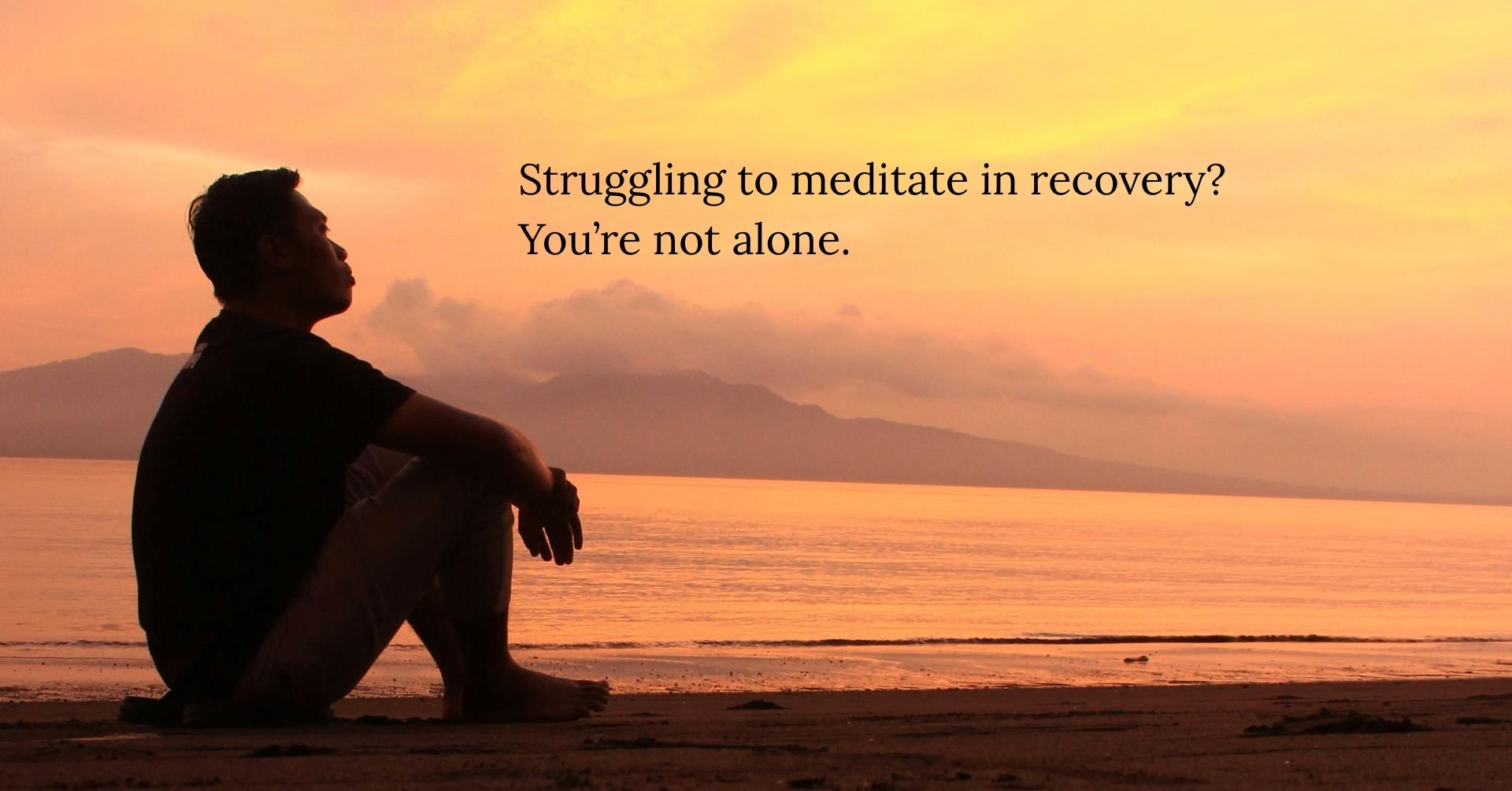
If meditation feels hard when you're in recovery, you're not doing it wrong. When I first came into the Program, I had no use at all for prayer or meditation. Today I wouldn't start a single day without them.
In between, I ran into almost every struggle I now see in the people I sponsor and teach. Here are the most common ones, and what helped me through each.
"I Can't Concentrate": The Scattered Mind of Early Recovery
Before my drinking became impossible to hide, I actually intended to become an Episcopal priest. Why not? The Church had given me some great drinking buddies in high places. But that was while I was still drinking.
When I quit, my attention simply wasn't there. I couldn't concentrate on the daily reading, let alone remember something someone had said in a meeting ten minutes earlier. Sitting still with my own mind felt impossible.
If that's where you are, know that it's common in early sobriety, and it doesn't stay that way. Your mind has been running on chaos for a long time. Learning to settle it takes practice, and the practice itself is what slowly brings your focus back.
"I Have to Believe in God to Meditate"
This is one of the biggest misconceptions I hear. Some of my students have told me that not believing in any kind of God was a huge obstacle for them when they started.
But another student told me the exact opposite. For him, having no picture of God in his mind made meditation easier. He could rest in stillness, even in nothingness, without feeling uncomfortable that he wasn't praying to some thing or some body.
To each their own. Whatever you believe, or don't believe, there is room for you in meditation. You don't need to have your Higher Power figured out before you sit down. Many people find that their understanding grows through the practice itself.

"I Can't Make It a Habit"
It may sound funny for an addict to have a habit problem, but I did. I couldn't get into a rhythm. I couldn't build a daily routine that had me meditating first, before anything else, before my mind got going.
When I finally found the secret, it was simple: start right at the very beginning of the day. I learned that my morning practice either made or broke my day. If you'd like a guided way to begin your mornings, my Create Your Day with Gratitude meditation is a good place to start.
The Chart That Convinced Me
An addict can't seem to take anything on faith for a while, so I made a chart. Each day, I tracked whether I had done my morning meditation and prayer, and then what the rest of the day turned into.
It was right there in black and white. If I did my morning ritual, the day was great. If I didn't, the day was not a good one.
If you struggle to stick with it, try keeping a simple chart of your own. Seeing the pattern for yourself can be far more convincing than anyone telling you it works.
Hard Stretches Still Come
There will be times when meditation feels harder, or when difficult feelings come up as you sit. In my experience, that's inevitable, but it doesn't last long.
Something surprising happened the longer I lived this way. My days became more sensitive, not less, to whether I had found my alignment and balance first. A skipped morning shows up quickly now. I've come to see that as a gift, because it keeps bringing me back to the practice.
Letting Go of Control Over the Day
I also had to accept something that was hard for me: it wasn't up to me what was going to happen each day. I was just running the race.
I finally had to rely on my Higher Power to show me the schedule, and then do my best to work through it. It's much like going to a job in the morning. Your boss hands you a to-do list, and you're set for a day's work. No questions, no grumbles, just get going.
Meditation is where I receive that list. Sitting quietly first thing in the morning is how I listen before the day starts making demands.
"Won't a Routine Make Life Dull?"
Does this sound like a dull, uninteresting way to live? I understand the worry. Life in addiction is always unpredictable and runs on chance, so it can feel exciting and dramatic.
I've lived both ways. I'll take some predictability and certainty, and stay close to the routines that work. Believe me, there are still plenty of unknowns, even with calm and routine in my life. Sometimes more than I'd like.
And that's exactly where prayer and meditation come back into play. Again.
If Meditation Feels Hard Right Now
Here's what I'd pass on to anyone in recovery who is struggling to meditate:
- Expect your focus to be scattered at first. It improves with practice.
- You don't need to believe in God to begin. Resting in stillness is enough.
- Meditate first thing in the morning, before your mind gets going.
- Keep a simple chart of your practice and how each day goes.
- When hard stretches come, keep showing up. They pass.
If difficult feelings come up and become overwhelming, it's okay to stop, open your eyes, and talk it through with your sponsor, counselor, or therapist. Meditation works best alongside your recovery support, not in place of it.
If you're new, short guided practices can make starting easier. The Addiction Recovery Meditation by Margrit was created for beginners in recovery, and the 5 Minute Reset with Ho'oponopono fits into even the busiest morning. If you're working the Steps, my 12 Step Meditation Series for Recovery offers a meditation for each one. You can also read more about how meditation shaped my own sobriety in Can Meditation Really Help with Addiction Recovery?
If you're struggling right now, please reach out for help. In the U.S., the SAMHSA National Helpline (1-800-662-4357) is free, confidential, and open 24/7. If you're in crisis or having thoughts of suicide, call or text 988.